Making Chorus Sing Across 10 Platforms

summary
Chorus ships across ten targets by measuring nightly builds, triaging mission dashboards, and fixing the biggest regressions first; automated Jenkins jobs capture per-location CPU/GPU stats and loading times, Pix and Unreal Insights find culprits, and manual profiled fixes plus 70% on low-end platforms drive most work. Engine changes include GetEstimatedPostLoadRTCost() to throttle render-thread loads and deferred GC to avoid stutter, totaling over a thousand engine modifications; result: stable 60 FPS on Series X and much smoother streaming.
AI-written summary · about
chapters (21)
- 0:00Chorus multi-platform journey
- 1:39Performance success ingredients
- 3:37Scaling space combat shooter
- 6:39Cross-platform optimization team
- 8:57Dedicated optimization time
- 10:08Isolation vs integrated testing
- 12:30Automated performance workflow
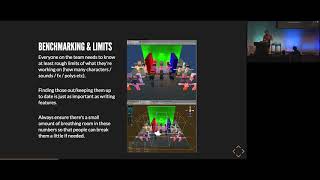
- 15:29Key performance metrics
- 17:06Profiling tools
- 18:34Scalable optimization strategies
- 20:46Unreal Engine features
- 23:28Level partitioning & memory
- 25:23Performance pitfalls
- 27:47Garbage collection management
- 29:43Async loading bottlenecks
- 31:17Frame rate throttling
- 33:54Refactoring heavy components
- 35:26Rewriting radar & effects
- 38:12Micro-optimization tweaks
- 39:03Results & player feedback
- 39:51Key takeaways
related talks
 01h 03mMaximizing Your Game's Performance in Unreal Engine
 55mSo You're Trying to Support a Medium Sized Studio....
 52mOptimising your game AFTER it ships
 46mNew Unity Features Seen Through the Profiler
 58mUE4 Performance and Profiling
 47mA Thousand Cuts Down to 5
 01h 00mUnreal Engine Game Optimization on a Budget
 44mPanel - UE4 Pipelines, Teams and Tools