The Unbreakable Team: Maintaining Build Stability in Unreal Engine

summary
Embark Studios runs a pre-submit verification pipeline that drops client check times from ~50 → 45 → 25 → 20 minutes and aims for ~10 minutes by combining light vs heavy agents, parallel client/server tasks, and selective pipelines for content vs engine changes; uses a GitHub→Perforce bridge called g2p4, internal try-job/submit-attempt desktop tools and an Embark launcher, flaky-test retries, log-parsing error annotations, Slack alerts, rotating “sheriff”/“ca-trooper” roles, and automated content fixes via Embark bot to keep builds stable.
AI-written summary · about
chapters (16)
- 0:00Introduction to Embark
- 1:35Verification strategies
- 4:09Pre-submit evolution
- 8:45Content vs engine checks
- 12:50Post-submit pipelines
- 14:43Git and Perforce workflows
- 17:56Developer submission tools
- 20:11Selective verification
- 21:41Try jobs and policies
- 24:33Playtests and distribution
- 26:58Testing challenges
- 29:46Content generation
- 31:56Handling build failures
- 34:38Build alerting system
- 36:45The human component
- 39:09Key takeaways
related talks
 44mPanel - UE4 Pipelines, Teams and Tools
 55mSo You're Trying to Support a Medium Sized Studio....
 40mAutomated Testing at Scale in Sea of Thieves
 44mHow Sprocket Games Achieved 10x Playtest Velocity for an Unreal Engine Game
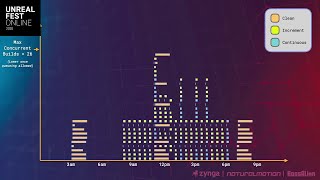 30mA Deep Dive into a Cross-Platform Build Farm
 46mWorkflow on Fortnite
 54mHow to Apply the Software Engineering Process to the Gamedev Process
 30mHarnessing the Unreal Engine Automation Framework for Performance Measurement