Workflow on Fortnite

summary
Epic accepts about 500 changes a day to Fortnite and uses a custom workflow built around Unreal Game Sync to let artists compile or fetch editor binaries, show build green/red badges, and run an incremental build every 10 minutes that loads changed assets and runs quick automated checks (move, shoot, build, harvest plus client/server login). Robomerge automates merges, releases use numbered dead-end branches on ~two‑week cadence, Live Coding (Live++) speeds iteration, Gauntlet runs multi-client tests, and a planned FStructuredArchive aims to enable text/backends for better asset visibility.
AI-written summary · about
chapters (20)
- 0:00Introduction
- 2:24Traditional Promotion Pipeline
- 6:50Case Study: Battle Breakers
- 10:04The Pitch
- 14:57PostBadgeStatus
- 15:35Continuous build & test cycle (10m)
- 18:45Precompiled Editor Binaries
- 19:20Features 1/4-Sync Filter
- 20:46Features 2/4 - Clean Workspace
- 21:47Features 3/4 - Bisect
- 22:20Features 4/4 - Customization
- 24:08Engine Model
- 26:51Fortnite Model (Now)
- 28:41Avoiding Conflicts
- 29:50Registering Other Branches
- 30:38Text Based Assets
- 34:42Iterating with the Editor
- 41:46Iterating on Device
- 42:29Iterating on Code
- 44:37Iterating in Prod
related talks
 55mSo You're Trying to Support a Medium Sized Studio....
 41mThe Unbreakable Team: Maintaining Build Stability in Unreal Engine
 37mDash Bash
 20mCI/CD Infrastructure for Efficient Mobile Game Development
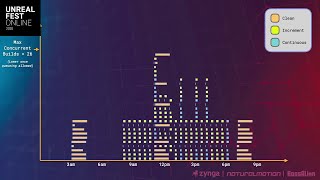 30mA Deep Dive into a Cross-Platform Build Farm
 33mVersion control for game developers
 43mInside Real-time Production: The Tools that make it Tick
 54mHow to Apply the Software Engineering Process to the Gamedev Process