A Thousand Cuts Down to 5
summary
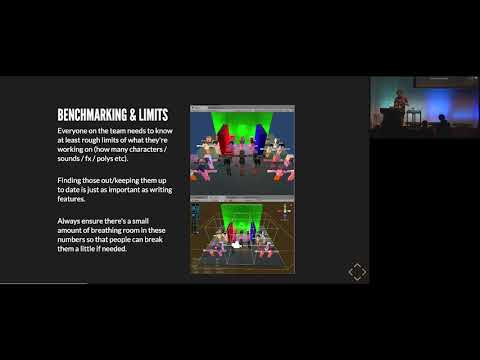
Case study of a GearVR Unity game that hits target 60 FPS by enforcing concrete limits (roughly 75k static tris, 8k dynamic tris, 25 draw calls per eye) and using the Unity profiler and frame debugger to prove gains. Pipeline fixes include automatic texture atlasing, chunked mesh merging, a spawn-test asset workflow, ProBuilder greyboxing, custom occlusion culling and a one‑button build/run. These tools and rules let the team iterate on-device, cut draw calls without hand‑reworking assets, and reach correct framerate.
AI-written summary · about
chapters (14)
- 0:00Performance optimization challenges
- 2:29Game optimization philosophy
- 5:45Zombie Nom Nom VR case study
- 7:58Performance programming guidelines
- 9:01Tools for workflow efficiency
- 10:51Key optimization areas
- 15:04Benchmarking and collaboration
- 15:25Rendering pipeline and draw calls
- 20:51CPU vs GPU bottlenecks
- 24:03Artist content pipelines
- 29:57Level design pipeline
- 36:40Custom culling systems
- 38:06Build pipeline for testing
- 42:39Final insights
related talks
 23mOptimizing your mobile VR game
 43mFrom 0 to 90: achieving peak performance in multiplatform VR development
 52mMastering Unity VR Rendering
 47mThe Visual Technology of Gears 5
 01h 04mOptimizing for Unity iPhone 1 5
 40mMaking high fidelity Android games possible with Vulkan
 22mXR Graphics in Unity: Maximizing Your Game's Potential
 46mNew Unity Features Seen Through the Profiler