How Unreal was Used in the Design of the World's Most Advanced Research Facility for Neutron Science
summary
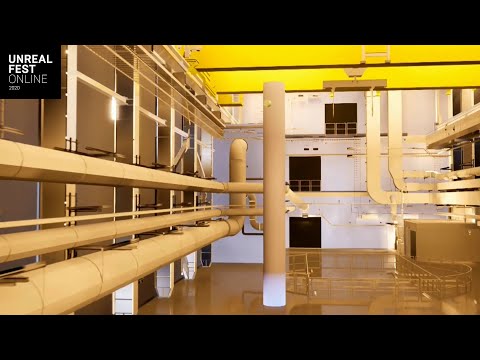
Unreal Engine is used to turn Revit, STEP and IFC models into interactive VR and real‑time coordination tools for the European Spallation Source, cutting a slow Navisworks→OBJ→3ds Max loop by adopting Visual Dataprep and Datasmith, importing IES lighting, and running multiuser VR reviews. A crane logistics simulator uses Blueprint controls to lift casks; STEP imports halve triangle counts versus OBJ exports. Point clouds validate built areas; Pixel Streaming is under evaluation.
AI-written summary · about
chapters (8)
- 0:00Introduction to ESS and BIM
- 2:15Unreal Engine applications
- 8:11Logistics and crane simulation
- 11:58Interactive crane workflows
- 13:53CAD optimization workflows
- 17:51Automating design updates
- 20:15Lighting and file formats
- 21:28Verification and final thoughts
related talks
 11mMaximizing Efficiency and Minimizing Costs with Unreal Engine
 05mHOK Uses UE4 and 3D Repo for Centre Block Project
 03mHOK Uses Twinmotion on Centre Block Project
 31mTurning the real world into digital assets
 50mUnreal engine At the intersection of games and movies. On fire!
 12mConnected by Wonder: When Physical and Virtual Worlds Collide
 06mZaha Hadid Architects’ UE4-Powered Configurators
 34mExecutive Panel: Virtual Production for Broadcast Sports