A Fully Immersive Driving Simulator for Autonomous Vehicles

summary
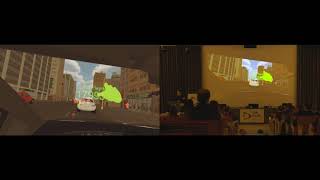
A 3xD 360 drive-in simulator uses eight projectors and an nDisplay cluster with a single master node running vehicle dynamics and an Echo TCP server to sync visuals and exchange data with external clients. CANbus hardware feeds real car dials and accepts control signals. Radar and LiDAR are implemented in Blueprints using raycasts, LiDAR packing points into 12‑byte XYZ records sent to MATLAB, and the lab is converting 80 miles of LiDAR scans into Unreal scenes.
AI-written summary · about
chapters (13)
- 0:00Intro
- 1:08To make future vehicles, technologies and services dependable, desirable and viable, we need to learn from a continuum of simulation, testing, trials and early deployment
- 2:30The 3xD Simulator
- 4:11Why we moved to Unreal
- 6:05The Vehicle Template
- 6:35Upgraded Environments
- 7:07Object Deliverer
- 9:56Controller Area Network (CAN)
- 11:27Simple Architecture
- 13:27How to Fool a Sensor
- 18:20Rain in Highways Project
- 19:50Summary
- 20:38Next Steps
related talks
 14mCross-Car, Multiplayer Games for Semi-Autonomous Driving
 24mTransforming Driveware into AI Hardware – Unlocking Future of Joy
 28mOpenAdx "Autonomous Driving Simulation" Testbed – hardware in the loop
 05mMixed Reality Visualization in Automotive SDR Networks
 56mWhen your Twin is Digital. And in 3D
 13mAugmented Reality in Cars
 46mShift Right Into the Metaverse With Digital Twin Testing
 51mFrom design to dealer: Tools for getting to 'yes' with VR/AR