Lessons From Our Zero Trust Journey: Successes, Failures & Dodging Pitfalls

summary
Organization starts Zero Trust in 2017 and completes a four year journey by rearchitecting around Google’s BeyondCorp approach, Okta for IAM, LogRhythm for UEBA/SIEM, Carbon Black/Cylance endpoints, Intune/Kandji MDM, Centrify PAM and a SaaS policy broker (Zscaler/Palo Alto choice). Implementation yields 99% of firewalls removed, roughly 30–40% cost savings versus legacy appliances, major IT ticket reduction from automated provisioning, smooth COVID remote pivot, and lingering need to budget for custom integrations and periodic re‑evaluation.
AI-written summary · about
chapters (21)
- 0:00Introduction
- 0:57What is Zero Trust
- 2:34Zero Trust The Titanic Principle
- 4:04Implementing Zero Trust
- 6:15Why Zero Trust
- 7:30How We Got Started
- 8:41Zero Trust Architecture
- 9:57Zero Trust Ecosystem
- 11:35Data Mapping
- 13:34Business Plan
- 15:19Identity Access Management
- 17:38Trust Inference
- 20:19Micro Segmentation
- 21:40Custom Work
- 25:34MDM
- 26:51Byod
- 28:17Sassy
- 30:04Slowdowns
- 31:49Indirect Costs
- 32:46COVID Benefits
- 34:47Lessons Learned
related talks
 31mEmbracing Zero Trust When You Aren't the World's Largest Internet Company
 18mRedefining Cybersecurity: Harnessing Zero Trust Architecture for a Resilient Future
 45mZero Trust: Getting to Step One..and What to Do When You Get There
 18mImplementing Zero Trust at Enterprise Scale
 19mBeyond Perimeters: Implementing Zero Trust at Enterprise Scale
 51mIt’s All Geek to Me: Communicating The Business Value of Zero Trust
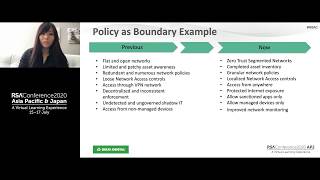 27mA Simplified and Practical Approach to Pursuing a Zero Trust Architecture
 02h 48mZero Trust: the new normal!