How 2020 Vision Has Blurred Attorney Client Privilege in Incident Response

summary
Covers recent 2020 case law affecting attorney–client privilege in incident-response forensics and explains how courts and regulators evaluate whether forensic work is privileged. Names practical strategies and techniques (for security teams and incident responders) to avoid common pitfalls that lead courts to find no privilege or waiver, and details what aspects of the incident-response function and documentation should be handled to preserve privilege.
AI-written summary · about
chapters (11)
- 0:00Intro
- 0:42Why Does Privilege Even Matter?
- 3:34What Protections May Apply?
- 4:49When Do the Protections Apply?
- 11:08Business Issue vs. Legal Issue (Focus is on the Why) Action
- 22:35What Industries Were Getting Hit the Hardest?
- 33:03Incident Response Plans and Teams (IRPs/IRTS) • IRPs should outline responses to different scenarios Incidents to consider
- 37:37Engaging Counsel Is Not Enough
- 52:30Reporting/Disclosing Information to Regulators
- 55:41Dual-Track Investigations: What's the Purpose?
- 58:05Apply What You Have Learned Today
related talks
 49mIR: Optimizing Communications and Action Between Legal and Tech Leaders
 42mApplying Forensic Engineering in Cybersecurity Incidents
 49mWhat Have the Courts Done Now? Explaining the Impact of Recent Cyber Cases
 51mReal World Stories of Incident Response and Threat Intelligence
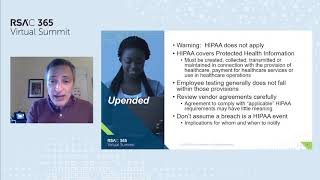 29mManaging Privacy and Cyber In A Pandemic: Lessons Learned For 2021 & Beyond
 49mCan You Handle The Truth? Lawyers Can Be CyberPro's Best Friend
 20mPrivacy Paradigms for Law Enforcement Response
 44mBest Teacher is Last Mistake: Improving and Applying Incident Response Plan