Enemy Inside the Gates: Securing the New Battleground
summary
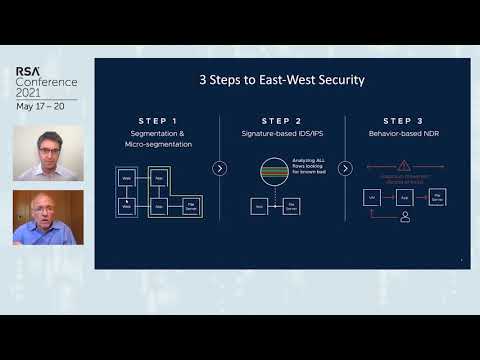
Breaches bypass perimeters so the talk advocates securing East‑West traffic by embedding tiny, software distributed micro-firewalls and IDS/IPS at each service in the virtualization layer, plus WAFs and purpose‑built workload protection. An internal audit across hundreds of enterprises almost always finds compromises — one example shows 48 lateral movements over 9 months. Detection combines encrypted‑traffic analysis, TLS options and guest introspection to pull decrypted files into a sandbox, and uses supervised+unsupervised ML trained on millions of samples; XDR fuses host and network context.
AI-written summary · about
chapters (14)
- 0:00Intro
- 4:46Best In Class Data Center Security
- 5:36Focus: East-West Security
- 9:29Harnessing The Power of Al
- 12:51Al-based Detection of Malicious Network Behaviors
- 15:06More training data is (almost) always better
- 17:12Al-Based Detections Across Cyber Kill Chain
- 21:32Network Detection & Response Reduces the Search Space
- 22:05Correlating Events Across Multiple Hops and Over Time
- 23:35Detecting Threats Hiding in Encrypted Traffic
- 25:18Encrypted Traffic Analysis
- 26:25File Analysis via Guest Introspection
- 30:41Comprehensive Workload Protection
- 34:36Enabling Defense in Depth in the Data Center
related talks
 21mThe New Ground Truth for Security
 45mDefenders Struggle as the Adversary Continues to Break Away
 46mShielding the Clouds: Advanced Cyber Defense in Hybrid Environments
 15mThe Airgap Paradox: Adversarial Tactics & Defensible Design
 57mInsights and Predictions: What's Next in InfoSec
 35mDefense Through Invisibility: Zero Trust Security for the Enterprise
 48mLateral Movement in the Age of Hybrid Cloud
 35mThe Best Defense is a Great Offense: Leveraging Automated...