Zero Trust: Getting to Step One..and What to Do When You Get There

summary
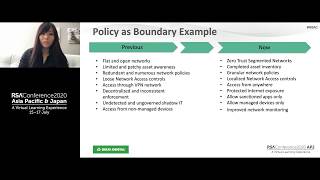
Claims that Zero Trust reduces breaches by removing implicit network trust and uses a five-step model: define a protect surface (data, applications, assets, services), map transaction flows, place policy enforcement points, create binary allow/deny rules via the Kipling method policy (who what when where why how), then monitor. Implementation examples use Google Cloud IAP + load balancer, subnet isolation, Cloud SQL, dedicated service accounts, layer 7 IDS/IPS and Terraform; a prototype covers 14,000 researchers across 22 directorates and successfully contains incidents when applied.
AI-written summary · about
chapters (4)
- 0:00Start
- 13:21Zero Trust Design Concepts
- 16:24The 5-Step Methodology for Deploying Zero Trust Guides Your Journey
- 25:25Map the Transaction Flows
related talks
 31mEmbracing Zero Trust When You Aren't the World's Largest Internet Company
 40mZero Trust, Zero Pain: A Practical Implementation with Intrinsic Security
 02h 48mZero Trust: the new normal!
 40mClarifying Zero Trust: The Model, the Philosophy, the Ethos
 49mZero Trust Application Architecture
 18mImplementing Zero Trust at Enterprise Scale
 27mA Simplified and Practical Approach to Pursuing a Zero Trust Architecture
 01h 02mIntroduction to Zero Trust Security