How to make great games without crunch / mental health problems in the games industry
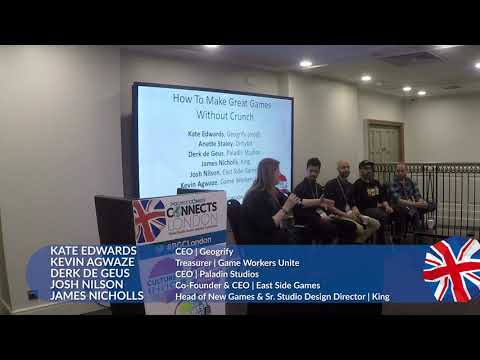
summary
Panelists give concrete fixes: embed QA into teams instead of isolating them, run paid mid-day workouts and clear no-email time to decompress, buy third-party therapy and offer private medical therapy sessions, and use time-for-time compensation rather than cash bonuses. Cited evidence: Take This’s Crunch Hurts white paper claims two weeks is the sustainable limit and links heavy crunch to lower Metacritic scores. Case examples: Grid Autosport ships in under a year with careful cuts; one studio scales from six to 100+ while phasing out work‑from‑home.
AI-written summary · about
chapters (9)
- 0:00Introduction and panel setup
- 1:04Panelists self-introductions
- 3:10Understanding burnout in games
- 5:18Crunch culture and its effects
- 9:00Supporting mental health at work
- 17:34Passion vs. toxic crunch
- 23:19Managing voluntary crunch
- 27:09Building crunch-free workplaces
- 34:21Q&A on workplace transparency
related talks
 25mStaying on Target - How Mental Health Affects Game Creation
 55mOpening Lightning Talks
 36mPanel: Tech Community Share Out: Maintaining a Healthy Balance with Work
 11mTips from Industry Vets – Julie Wotzko
 01h 04mLeadership, Career & Culture Highlight: Nurturing Neurodiversity: Making Game Dev Accessible
 54mDev psychology: your own brain is your worst enemy
 45mDeveloper career tools: Saying NO to improve mental health Q&A
 32mMaintaining High Morale, a Panel Discussion