Securing High-performance RISC V-Processors from Time Speculation

summary
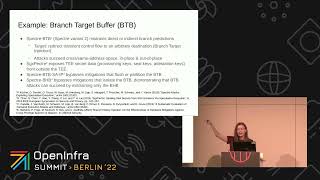
Claims that RISC-V cores can remain high‑performance while blocking speculation‑based timing leaks without ISA changes, backed by measurements that about 25% of instructions are past the point of no return. Concrete mitigations include delay predictor updates until commit, buffer speculative cache fills in the store‑completion buffer and allocate directly to L1, avoid speculative updates to shared resources, and handle variable‑latency units (e.g. FP sqrt) and BTB/partitioning strategies to prevent cross‑domain contention.
AI-written summary · about
chapters (9)
- 0:00Introduction to Spectre attacks
- 1:46High-performance secure processors
- 5:59Mitigation techniques overview
- 8:11Cache and predictor updates
- 10:19Shared resource contention
- 12:23Preventing speculative leaks
- 13:30Resource flushing strategies
- 14:31RISC-V security recommendations
- 15:35Q&A
related talks
 33mGhosting the Spectre
 47mA Security RISC? The State of Microarchitectural Attacks on RISC-V
 12mHardware Verification of Timing Side Channel Freedom in the Spectre Era
 25mRISC-V Zkt: Portable Timing Attack Resistance (via Dynamic Taint Analys...
 27mControl Flow Integrity on RISC-V
 16mMitigating Transient-Execution Attacks with CHERI Compartments
 27mMitigating speculative execution attacks with ASI - follow up
 46mRethinking Architectures and Abstraction for a World Where Security Improvements Matter More than Performance Gains