Mitigating speculative execution attacks with ASI - follow up

summary
KVM prototype implements ASI to map only non-sensitive pages and use page faults to stop speculative leaks, with the entry/exit path doing an ASI enter/exit flips page tables plus a pre-exit IPI to stall sibling cores and a branch predictor flush. Measured on Redis and fio the overhead ranges from 2–14% performance hit (examples: 12.5% with full mitigation, ~2% if no sibling stop, ~7% on Spike), and the team claims common vulnerability patches drop from 3–10 lines of mitigation versus 52 files/1,600 lines previously.
AI-written summary · about
chapters (8)
- 0:00Introduction and motivation
- 3:48Performance impact of mitigations
- 7:03How speculative attacks work
- 9:35ASI core concept explained
- 12:45Discovering non-sensitive pages
- 16:39Extending ASI to user space
- 23:40Threat model and MSR concerns
- 25:05Why ASI was overlooked
related talks
 49mKVM Address Space Isolation
 48mAddress Space Isolation is ready
 17mSecuring High-performance RISC V-Processors from Time Speculation
 33mGhosting the Spectre
 16mMitigating Transient-Execution Attacks with CHERI Compartments
 14mSecure AVIC: Securing Interrupt Injection from a 'malicious' Hypervisor
 46mRIDLed with CPU bugs
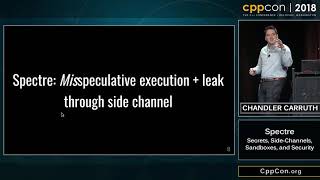 01h 28m“Spectre: Secrets, Side-Channels, Sandboxes, and Security”