Programming Space and Habitats
summary
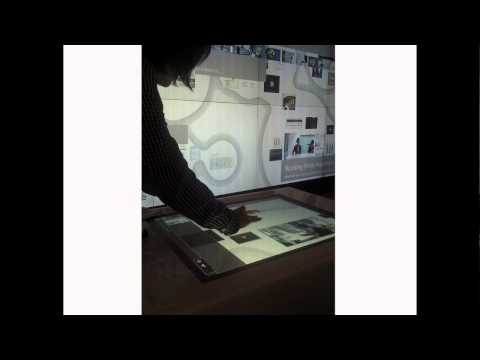
A research program builds and tests inhabitable technologies: a programmable power grid — a networked array of sensors and actuators with a programming gateway — plus programmable wall panels (Hoberman-built) that modulate opacity and trigger projectors. Prototypes run with 2–30 users, and Georgia Tech students reprogram lights, move furniture and walls at 2 a.m., meeting stated performance needs. The claim: spaces become programmable artifacts that successfully shape focus, circulation and social behavior as an open-source space platform.
AI-written summary · about
chapters (7)
- 0:00Introduction to space habitats
- 1:04Networked environments and lead users
- 2:27Microsoft and Herman Miller collaboration
- 4:53Programmable walls and natural interfaces
- 6:39Georgia Tech Library prototypes
- 8:22Environment as interactive technology
- 9:47Future of intelligent environments
related talks
 08mLearning from Users: Everyday Playful Interactions to Support Architectural Spatial Changes
 Learning from Users: Everyday Playful Interactions to Support Architectural Spatial Changes
 31mBuilding the next computing platform
 27mAutomation for Inclusion
 15mLiving, working and moving in the IoT
 59mThink by Making
 35mFuture Ethics
 14mCreativity Exchange: Second Home