Countering Acoustic Adversarial Attacks in Microphone-equipped Smart Home Devices
summary
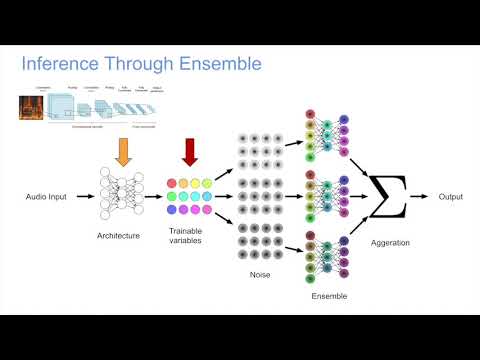
Compressed on-device audio DNNs get a concrete defense: add noise to SVD diagonal elements during training (stochastic compression), optimize cross-entropy plus consistency and adversarial losses, and aggregate a small ensemble at inference (3-model ensemble). Evaluations use speech-command and ambient-audio tasks under FGSM and PGD, show conventionally trained models hit up to 100% error under attack, and the defended compressed models yield about 17% relative error improvement in real over-the-air tests with varying microphones and placements.
AI-written summary · about
related talks
 45mAnalogy Cyber Security—From 0101 to Mixed Signals
 21mDeveloping Machine Learning Based Speech Enhancement Models for Teams and Skype
 24mCommanderSong: A Systematic Approach for Practical Adversarial Voice Recognition
 30mHidden Voice Commands
 21mCan AI Disrupt Speech Compression?
 45mThe Sound of Your Secrets: Teaching Your Model to Spy So You Can Learn to Defend
 36mAdversarial Attacks on Deep Learning
 21mSoK: Efficiency Robustness of Dynamic Deep Learning Systems