mmASL: Environment-Independent ASL Gesture Recognition Using 60 GHz Millimeter-wave Signals

summary
mmASL uses a 60 GHz millimeter-wave NI+Si beam multi‑FPGA software radio platform and a Doppler‑spread spatial spectrogram pipeline to enable visual wake‑word detection and ASL sign classification. A multi‑task CNN predicts 50 signs plus two phonological auxiliaries (repetitive motion and motion axis) from ~15,000 samples collected from 15 users across three environments. Wake‑word CNNs outperform classical models, sign recognition reaches about 87% average accuracy, and the system tolerates interfering users and unseen positions.
AI-written summary · about
related talks
 06mTeaching American Sign Language in Mixed Reality
 06mSonicASL: An Acoustic-based Sign Language Gesture Recognizer Using Earphones
 35mHow deep learning can help interpret American Sign Language
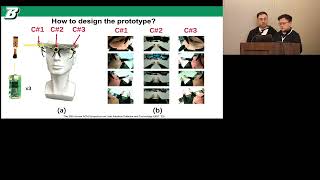 10mSignGlass: First-Person View Comprehensive and Generalizable ASL Translation Using Wearable Glass
 08mIndian Sign Language Recognition (ISLAR)
 27mIndian Sign Language Recognition(ISLAR)
 01mEnabling Real-time Sign Language Translation on Mobile Platforms with On-board Depth Cameras
 30mBuilding a Sign-to-Speech Prototype with TensorFlow, Pytorch, and DeepStack