Analogy Cyber Security—From 0101 to Mixed Signals

summary
Demonstrates concrete attacks that corrupt sensors’ outputs and cascade to systems: inaudible ultrasonic commands activate phones and voice assistants by exploiting microphone nonlinearity; resonant excitation of MEMS makes accelerometers and gyros report false motion (Fitbit shows ~80,000 extra steps over 20 hours); obstacle sensors on a Tesla summon stop seeing a nearby person after acoustic interference and reboot; hidden ultrasound under a hard drive triggers its shock-sensor spoofing causing kernel panic, dropping throughput and erasing ~80 seconds of CCTV. Builds cheap rigs (e.g., 40 cheap transducers at 10 m) and proposes ML-based mic filters plus richer sensor metadata and redundancy as defenses.
AI-written summary · about
chapters (16)
- 0:00Start
- 3:08What is new? → Smart devices
- 6:47Sensors are a proxy for reality
- 8:05Tesla Autopilot
- 9:54Fooling Obstacle Sensors - Demo on Tesla Summon
- 10:58How to do research in sensor security?
- 11:54What is inside a sensor module
- 20:07Signal Flow of Dolphin Attack
- 23:38Attack Scenario: Remote Attack
- 24:55MEMS Sensors Accelerometer
- 27:48Free Fitbit Steps!
- 28:34Fitbit Rewards
- 29:10Fire Drill Knocks ING banks data center offline
- 29:31Hard Disk Mechanics
- 31:36Threat Model
- 35:30Conclusions: Analog is the new digital
related talks
 30mThe Motion Sensor Western: The Good, the Bad, and the Ugly
 26mCuriosity Killed the Hack
 37mHacking a Cat — Going Beyond Traditional Attack Vectors
 47mMiniaturization
 06mUsing Sonar for Liveness Detection to Protect Smart Speakers against Remote Attackers
 48mSecurity Vulnerabilities in AI Assistant Based Applications
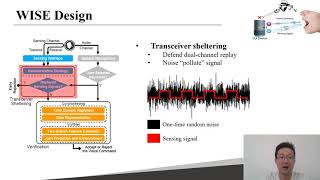 06mAnti-Spoofing Voice Commands: A Generic Wireless Assisted Design
 46mAttacking Hardware Systems Using Resonance and the Laws of Physics