Understanding Users' Knowledge about the Privacy and Security of Browser Extensions

summary
Online survey with 353 participants measures attitudes, knowledge and preferences about browser-extension permissions and finds concrete gaps: users express interest in privacy yet do little to protect data, report limited technical knowledge about extensions’ capabilities, and favor permission text that builds a clear mental model. The paper quantifies those gaps, tests preference patterns for permission wording, and recommends clear language, technical controls, and distinct responsibilities for safer extension permissions.
AI-written summary · about
related talks
 01h 02mBrowser Extensions: Threat or Danger?
 13mUnpacking the Social and Emotional Dimensions of Security and Privacy User Engagement
 42mPrivacy Toolkit: Privacy Awareness In The Digital Age
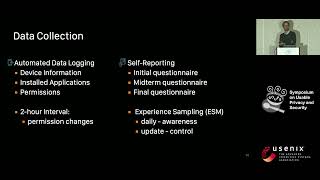 14m“I do (not) need that Feature!” – Understanding Users’ Awareness and Control of Privacy
 11mMore than Usability: Differential Access to Digital Security and Privacy
 10mEvaluating Privacy Perceptions, Experience, and Behavior of Software Development Teams
 28mAn Inconvenient Trust: User Attitudes Toward Security and Usability Tradeoffs...
 15mEnhancing Privacy through the Visual Design of Privacy Notices: Exploring the Interplay