Evaluating and Redefining Smartphone Permissions with Contextualized Justifications for

summary
Two online between-subject surveys with 581 participants use a hypothetical furniture MAR app and three permission labels (bare label, generic purpose text, contextualized justifications) and find the contextualized text increases users’ understanding and perceived informativeness, reduces privacy concerns, and indirectly raises willingness to grant access via those mediators. Recommendations include adding novel permissions like face and speech recognition, short explanations for sensors such as LiDAR, clearer denial outcomes and improved visuals (expandable text) to prevent permission fatigue.
AI-written summary · about
chapters (6)
- 0:00Introduction
- 0:34Scope
- 1:47Research Questions
- 3:41Privacy Concerns
- 3:53Dependent Variables
- 4:17Conclusion
related talks
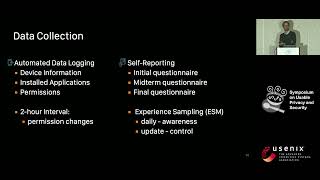 14m“I do (not) need that Feature!” – Understanding Users’ Awareness and Control of Privacy
 53mExplain, please. Help your users trust you
 53mDesigning for Privacy in Mobile and Web Apps
 28mEmbracing innovation by building privacy friendly apps
 11mCreating Effective Labels
 21mDeveloping privacy user-centric apps
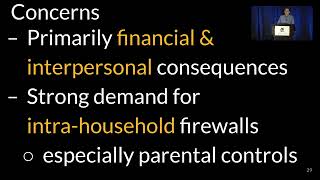 11mRuntime Permissions for Privacy in Proactive Intelligent Assistants
 11mUser Understandings of Technical Terms in App Privacy Labels