RVEdge-Vision: A Fully Open,Ultra-Efficient On-Device AI Platform for Smart Eyewear

summary
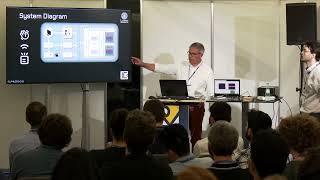
An open prototype integrates a Gap9 RISC‑V SoC, an ultra‑low‑power RGB DAX036X and an event‑based GenX320 camera, plus BLE, mic and speakers, inside a glasses form factor. Optimized tiny‑YOLO style nets and a 2D+1D convolutional model run on‑device with 78 ms inference latency from 20 ms input windows. Target system power is ~100 mW; measured always‑on gesture recognition (including sensing and inference) sustains ~17 hours and reaches a year with duty cycling.
AI-written summary · about
chapters (7)
- 0:00Introduction and speaker welcome
- 0:24Challenges in smart eyewear AI
- 3:59Hardware power constraints and GAP9 choice
- 5:44Event-based camera advantages
- 8:34Hardware architecture and prototype
- 12:31Gesture recognition demo and results
- 15:26Open platform and conclusion
related talks
 30mTurning Glasses into Smart Assistants: Open Source Vision Language Models
 20mComputer Vision at the Edge with OpenVINO
 17mNext-Generation Edge AI with RISC-V Vector Cores for Vision Applications
 20mScaling Edge AI with Elixir and Nerves
 01mAAEON's new ARM based solution.
 14mComputer vision on edge devices
 11mRISC-V enabled, low-power CNN classification in Edge devices
 16mEdge Computing and next-gen of IoT Sensors