From unintentional greenwashing in games to saving real dolphins

summary
Games that try to teach climate action vary by how concrete they get: SimCityEdu is discontinued while SimCity and Sims 4 trade realism for monetizable eco lifestyle fantasy; Anno prototypes add an EOB balance mechanic so environment “hits back”; Fate of the World packs too much data and reaches fewer players; Minecraft’s Rockefeller 1 billion by 2030 Build Challenge and Borderlands 3’s citizen‑science event produce real results — 135 million puzzles and 4 million contributors — Pokémon Go helps plant ~300,000 trees, and tiny projects use a solar‑powered web server to cut emissions.
AI-written summary · about
chapters (22)
- 0:00Unintentional greenwashing in games
- 3:37Players and climate change
- 7:11Climate-aware game design
- 7:33Sim City’s urban design
- 9:21The Sims 4 Eco Lifestyle
- 10:27Anno series climate control
- 11:33Fate of the World realism
- 12:38Teral’s reverse city builder
- 13:41Minecraft sustainability
- 14:46Factorio environmental metaphors
- 16:12Beyond Blue’s education
- 16:53Alba Wild Adventure activism
- 17:36Eco ecosystem simulation
- 18:18Green Hell survival lessons
- 18:38Borderlands 3 citizen science
- 19:21Game revenue donations impact
- 20:05Pokémon Go tree-planting
- 20:47Climate games advocates?
- 22:16Gaming hardware carbon footprint
- 23:25Reducing CO2 in games
- 24:08Board games climate education
- 24:48Call to action
related talks
 20mClimate Crisis and Video Games
 52mKeynote: Turning Games Green: How the Industry is Signing up to Play for the Planet
 03mClimate Connected: An Immersive VR and PC Game for Climate Change Engagement
 18mResolving complex urban challenges with gaming
 37mWhy every Developer should care about the Environment
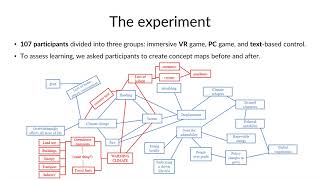 07mChanging Climate Change Mental Models Through Game-Based Learning: A Controlled Experiment Involv...
 01mEcoMeal: Gamified Eco-Feedback of Food Consumption using a Virtual Garden
 26mGamification and how Games are Occupying the World!