Pepper's Cone: An Inexpensive Do-It-Yourself 3D Display
summary
An inexpensive 3D display built from an iPad + $2 plastic sheet and a folded cone reflects pre-distorted images so objects appear suspended inside the reflector. Calibration maps each tablet pixel to camera space using binary-stripe decoding, and the display updates with the tablet gyroscope for orientation. Analysis shows 51° cone for a 12.9" iPad maximizes a no-more-than-0.5° vertical-parallax region; anaglyph binocular mode corrects stereo but users prefer the simple glass-free version.
AI-written summary · about
chapters (18)
- 0:00Introduction to Pepper's Cone
- 0:35Pepper's Ghost and DIY 3D displays
- 2:24Goal and simple setup
- 3:06How the display works
- 5:01Calibration with binary codes
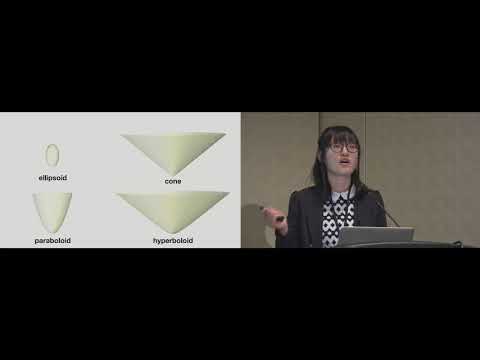
- 7:14Finding the best reflector shape
- 9:41Effective display size analysis
- 11:33Best cone parameters for iPad
- 11:55Stereo depth perception limitations
- 13:24System limitations and viewing angles
- 14:19Applications in medicine and education
- 15:10Adding head tracking
- 16:15Open-source and future work
- 16:38Conclusion and call to action
- 17:01Q&A: Paper and teaching value
- 17:42Q&A: Camera tracking challenges
- 18:51Q&A: Largest display size possible
- 19:37Q&A: Brightness and material considerations
related talks
 09mLenticular Objects: 3D Printed Objects with Lenticular Lens Surfaces that Can Change their ...
 47mAdd depth! Stereoscopic imagery for everyone
 51mLet's Play! Build your first Cardboard App (en)
 09mPhyxel: Realistic Display of Shape and Appearance using Physical Objects with High-speed ...
 14mCombining Shape-Changing Interfaces and Spatial Augmented Reality Enables Extended Object Appearance
 19mMulti-device Storyboards for Cinematic Narratives in VR
 44mZivid One - The story behind the World’s most Accurate, Real time 3D Color Camera
 37mThe Conquest of Space Happens in Your Pocket