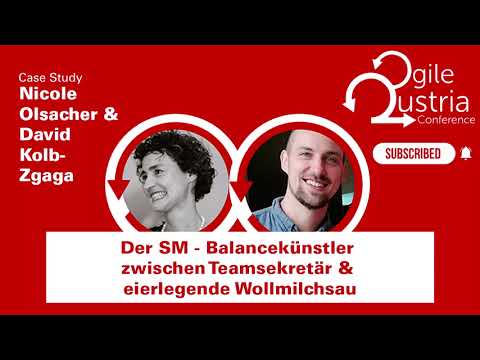
The SM – Master of Balance
summary
Focuses on the Scrum Master role and why its impact—on team collaboration and organizational culture—is hard to measure and often undervalued. Discusses factors that make a Scrum Master’s work and value invisible (positive and negative) and explores what is needed to do effective Scrum Mastering and make that contribution visible.
AI-written summary · about
chapters (9)
- 0:00Scrum Master intro
- 4:23Scrum Master versatility
- 8:46Teamwork challenges
- 12:00Role expectations
- 16:58Good Scrum Master traits
- 20:37Measuring results difficulty
- 26:20Vision, roles, agile culture
- 28:46Transparency and self-reflection
- 32:02Summary
related talks
 05mWhat is a Scrum Master good for?
 02mInterview with
 24mIs the Scrum Master a Coach? Mentor? Facilitator? Exploring Eight Choices
 56mThe Challenge of Making Scrum Mastery a Profession — Growing Healthy Teams and Flooding the Organization with Teamwork
 41mYour Scrum Master Is Deceiving You... and You Know It!
 48mMeasuring Performance: Quantifying the Work of a Scrum Master
 41mThe New Era of the Scrum Master
 26mThe systemic Scrum Master