What Drives SMiShing Susceptibility? A U.S. Interview Study of How and Why Mobile Phone
summary
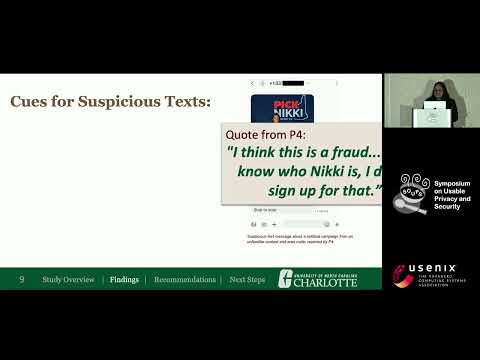
29 interviews in Charlotte reveal that people judge SMS by content, format, links, and personalization not by short codes or numbers; participants see links, misspellings, urgent calls to action, or odd format as suspicious while last-four digits, known context, and official layout increase trust. Financial and delivery messages are most tested (shown as 3 of 6 legit/fraud pairs). Older and previously trained users perform better, Android shows built-in spam filter vs iOS lack, and recommendations are UI warnings, better filters, easier reporting, and targeted training.
AI-written summary · about
chapters (11)
- 0:00SMiShing susceptibility study intro
- 1:11What SMiShing is and why it matters
- 2:14Email phishing vs SMiShing
- 3:39Research questions and design
- 5:03Judging SMS credibility
- 6:52SMS suspicious cues
- 7:15SMS legitimate cues
- 8:41Warning signs in SMS detection
- 10:09Training and demographics impact
- 10:56Improving SMS security
- 11:58Future research directions
related talks
 12mCan You Walk Me Through It? Explainable SMS Phishing Detection using LLM-based Agents
 42mThe Old is New Again: An Intro to SMS Security and Why It’s Vital
 01h 18mPrivacy and Threat in Practice: Mobile Messaging by Low-Income New Yorkers
 03mDecision-Making Errors in Mobile Phishing
 01h 02mWhy using SMS in the authentication chain is risky
 43mIf You Can’t Trust the Phone Company: A Mock Trial
 30mAuthentication Strategies to Protect Your Customers and Your Brand from Sophisticated Attacks
 28m"Something isn't secure, but I'm not sure how that translates into a problem"