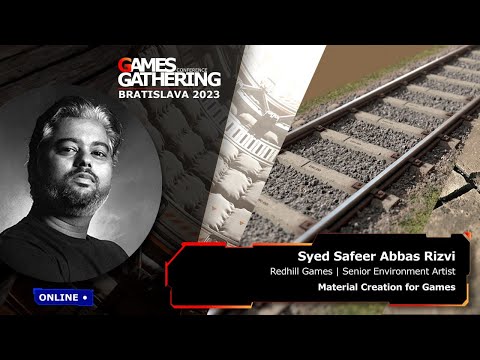
Material Creation for Games
summary
Covers concrete, brick and sidewalk materials with exact practices: gather a key reference, supporting refs and light‑response shots; decide metallic vs dielectric first; use Substance Designer/Painter and Photoshop and test in Unreal; prioritize normal-map detail over roughness for reflectivity — normal map matters; work organized in layers, macro-to-micro, check scale next to a human, keep 70/30 flat-to-detailed balance, and make portfolio renders more detailed than the tileable, game‑ready base (example: 6 tiles, 3 broken).
AI-written summary · about
chapters (17)
- 0:00Introduction
- 1:53Agenda
- 3:00Reference Gathering
- 3:55Key Reference
- 4:49Supporting Reference
- 11:20DNA
- 13:22Weathering Aging
- 16:56PBR
- 20:20Workflow Habits
- 28:15Macro to Micro
- 34:35Portfolio vs Asset
- 40:15QA
- 41:50Observe
- 43:27Inspiration
- 44:35References
- 45:59Portfolio
- 47:03Advice
related talks
 53mDigital Material with the Substance Tools
 30mCapturing real-world materials for real-time development
 38mGame assets? For when and for what? Questions you should ask yourself
 48mOn Creating High-Quality Assets
 17mHow to mix third-party assets without your game looking cheap
 53mDelivering Their Vision
 44mDynamic & Different: Real-time Look Development for Stylized Games.
 15m3D Art