Leading the way towards implicitly safe communities

summary
Presents concrete practices: platform hosts 50 million experiences and runs ~800 moderators with 24/7, localized teams; every uploaded audio, image and video is human-moderate[d] before publishing alongside text filters, machine learning and parental PIN controls. Claims 59% of teens report harassment; argues anonymity must remain but users should be accountable. Offers failures and wins — small studios learn from player feedback (Block Evolution’s crash-and-learn story), voice chat remains unmoderated so the platform avoids it, and community upstanders reduce harm.
AI-written summary · about
chapters (18)
- 0:00Introduction
- 0:33Is the online environment getting better
- 2:55Legal regime and accountability
- 6:13Gamergate and law enforcement
- 8:42Roblox
- 11:50Selfregulation
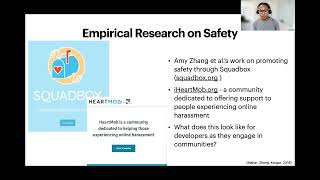
- 14:20The Rowe Box approach
- 16:34Removing anonymity
- 18:44Digital citizenship
- 22:05Parental responsibility
- 24:48Tools
- 27:14Localization
- 30:05Online safety and security
- 32:10Games as a cultural force
- 35:15Public narrative
- 39:11Creative freedom
- 43:11Be constructive
- 44:25Voice chat
related talks
 12mOnline community and safety in software engineering
 25mThe Source of Change: Bettering Online Open Source Communities... with Kattni
 01h 13mFeeling ‘Unsafe’ in Online Spaces Young Peoples' Perspectives on Online Harms and ..
 39mThe True Cost of Unmoderated Collaboration: A Story from the Trenches
 44mBuilding Diverse Social Networks
 50mCreating a Healthy Community Culture
 15mDesigning Game Communities for Kindness
 33mBuilding Compassionate Communities in Tech