Hybrid-Brailler: Combining Physical and Gestural Interaction for Mobile Braille Input and Editing

summary
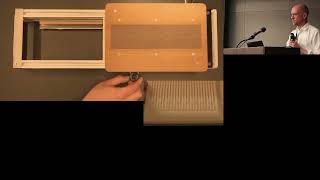
Hybrid-Brailler combines a physical back-mounted 3x3 chorded button grid with touchscreen gestures for editing and uses a custom PCB with an Arduino and Bluetooth plus nine off‑the‑shelf buttons in a 3D‑printed case. Two user studies with blind participants show entry rates match software Braille while input accuracy dramatically improves, editing is 21% faster overall, caret success is 85% versus 55% for TalkBack, and clipboard/selection drops task time from ~3.5+ to ~2 minutes.
AI-written summary · about
chapters (11)
- 0:00Introduction to Hybrid-Brailler
- 1:29Limitations of current Braille input methods
- 3:17Design inspiration from Perkins Brailler
- 4:44Physical keyboard layout and modes
- 6:50Gesture-based text editing techniques
- 7:57Hardware prototype and components
- 8:18User study on text entry performance
- 9:43User study on text editing performance
- 12:35Key findings and summary of results
- 14:48Future research directions
- 15:29Q&A session
related talks
 12mIt’s skeuomorphin’ time!! The enduring physicality of braille!
 12mTyping Haptically: Towards Enabling Non-auditory Smartphone Text Entry with Haptic Feedback for B...
 22mBraille.js. Bringing together accessibility, JavaScript and IoT
 31mA11Y IRL (Accessibility in real life)
 44mHack for good: Accessibility testing with a Flipper Zero
 24mA11Y IRL (Accessibility in real life)
 51mInclusive Methods for Co-Design Between Blind and Sighted...
 13mMagnePins: A Modular, Affordable, and DIY Refreshable Braille and Tactile Display