Watching 360° Videos Together
summary
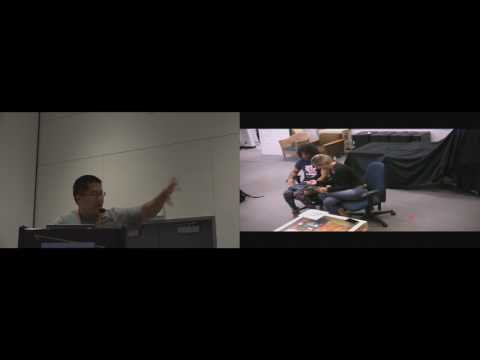
A study of 32 participants (16 pairs) watches a pre-recorded 360° campus bike tour on time-synced iPads where each person can pan independently and the main finding is that independent control breaks joint reference and conversational flow. Participants rarely perfectly mimic each other and often resort to looking at each other’s screens or physically dragging a partner’s view to reestablish focus. The paper proposes simple prototypes like gaze awareness overlays and a pan-to-view engagement button as design fixes; these are demonstrated as quick mockups rather than fully evaluated systems.
AI-written summary · about
chapters (6)
- 0:00Introduction to 360° video sharing
- 2:20Study setup and participants
- 4:08Key challenges in shared viewing
- 6:55Workarounds and interactions
- 7:36Design implications for multi-user players
- 9:13Q&A on motion sickness and awareness
related talks
 15mShot Orientation Controls for Interactive Cinematography with 360 Video
 20mOutside-In: Visualizing Out-of-Sight Regions-of-Interest in a 360 Video Using Spatial ...
 19mAn Eye For Design: Gaze Visualizations for Remote Collaborative Work
 32mDesigning Beyond the Screen
 17mGaze Augmentation in Egocentric Video Improves Awareness of Intention
 09mGazeChat: Enhancing Virtual Conferences with Gaze Awareness and Interactive 3D Photos
 19mInvestigating the Use of Spatial Interaction for 3D Data Visualization on Mobile Devices
 06mToward Lightweight In-situ Self-reporting: An Exploratory Study of Alternative Smartwatch ...