Words that welcome: content design with neurodiversity in mind

summary
Claims that ~15% of the world is neurodiverse and that simple content changes help a large user group; findings come from interviews with 18 people and product examples (DocPlanner, HubSpot, Finder, Katawiki). Concrete practices: use lists and if/then tables, show numerals as digits, avoid justified text, provide reminders and delivery times, offer closed captions limited to 40 characters per line and two lines, keep language simple, maintain a product glossary, recruit and test with diverse users, and prefer real-user testing over automated tools.
AI-written summary · about
chapters (9)
- 0:00Understanding neurodiversity
- 3:05Defining the spectrum
- 5:48Impact and design context
- 8:21Content design best practices
- 11:45Bridging gaps and uncertainty
- 14:42Text formatting and layout
- 16:58Multimodal content accessibility
- 19:25Resources and team inclusion
- 21:47Respectful recruitment and wrap up
related talks
 49mNeuroinclusive Content Design
 51mBuilding A11y Digital Experiences for Neurodivergent Users
 19mDesigning for Neurodiversity
 01h 08mAccommodating Neurodivergent Learners
 16mCognitive A11y: Designing Neuroaccessible docs for Neurodivergent minds
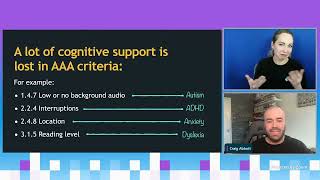 50mDesigning for neurodiversity
 49mUnderstanding the 'Why' Around Neurodivergent Inclusive Web Design
 54mDesigning for Neurodiversity: The Dos, the Don’ts & the Definitely Nots