Designing for neurodiversity
summary
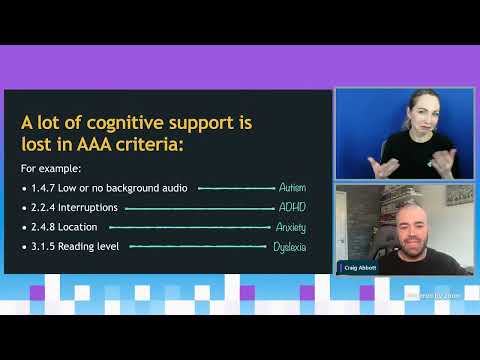
Argues that WCAG AA leaves neurodivergent people in the margins, cites KOGA cognitive accessibility as the practical bridge, and notes about 15% prevalence and that 67% of accessibility failures originate in design. Recommends concrete moves: preserve semantic headings, consistent icons, skip links, accept varied input formats, use a 4.5:1 contrast ratio, offer alternatives to autoplay and low or no background audio, support reduced motion, test with real users and catch issues early to avoid 6x–30x repair costs.
AI-written summary · about
chapters (18)
- 0:00Introduction and speaker background
- 1:05Neurodiversity definitions and context
- 3:12Accessibility standards and WCAG limitations
- 7:46Misconceptions about accessibility needs
- 10:10Disability models and social vs medical
- 16:34Designers' role in accessibility failures
- 19:21Designing for accessibility from the start
- 20:23Cognitive Accessibility Guidelines (COGA)
- 21:07COGA principle 1: Understandable content
- 27:18COGA principle 2: Finding what users need
- 32:10COGA principle 3: Clear and understandable content
- 35:59COGA principle 4: Avoiding mistakes
- 38:25COGA principle 5: Helping users focus
- 40:08COGA principle 6: Providing help and support
- 42:32COGA principle 7: Supporting adaptation
- 43:52Testing with real users
- 44:54Further reading and resources
- 45:35Key takeaways and closing thoughts
related talks
 44mDesigning with Accessibility in Mind
 38mDesigning for people with cognitive impairments
 01h 03mAccessibility: Making your websites more inclusive
 52mDesigning inclusive and accessible experiences
 52mCommon Accessibility Pitfalls
 36mThe Human Side of Accessibility
 38mWeb Accessibility Deep Dive
 37mMoving beyond empathy: a11y in documentation