Designing for Neurodiversity: The Dos, the Don’ts & the Definitely Nots

summary
Designs compare two real learning experiences — an in-person instructor-led class and an eLearning course — and show concrete fixes: dimmable lighting, clear signage, quiet fidgets/headphones, allow cameras off, and use closed captioning and transcripts. Guidance on words and visuals includes identity-first language (autistic not “has autism”), avoid blue/puzzle-piece branding, and normalize AAC and quiet stimming. Claims cite a notable 70% overlap between autistic and ADHD diagnoses and stress QA of quiz logic, consistent visuals, and free navigation.
AI-written summary · about
chapters (10)
- 0:00Start
- 3:25Social model of disability
- 15:05Language
- 21:41Social Skills
- 30:55ILT - Physical Space
- 35:04ILT - Personal Interactions
- 37:58VILT/Webinars
- 41:08Navigation and Pacing
- 42:31Layout and Graphic Design
- 43:24Content
related talks
 01h 08mAccommodating Neurodivergent Learners
 51mBuilding A11y Digital Experiences for Neurodivergent Users
 17mA case study: Accessible Design for Learning Management Systems
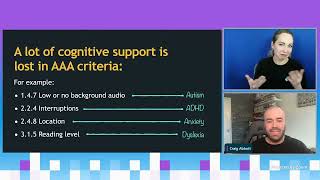 50mDesigning for neurodiversity
 26mWords that welcome: content design with neurodiversity in mind
 19mDesigning for Neurodiversity
 16mCognitive A11y: Designing Neuroaccessible docs for Neurodivergent minds
 52mNeuro-diversifying tech ...