Privacy Mental Models of Electronic Health Records: A German Case Study
summary
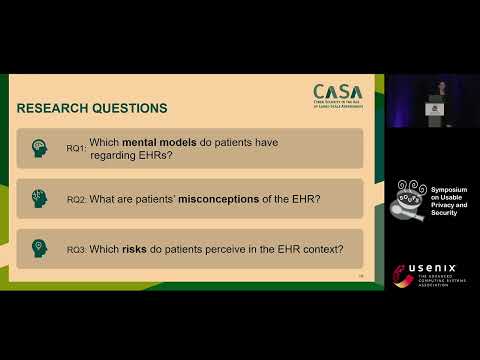
Semi-structured 21 interviews with sketching reveal that Germany’s centralized EHR (introduced 2021) stores patient-controlled files on encrypted servers and is exposed through 85 different apps, yet none had used EHRs; common misconceptions are that doctors have full control, emergency clinicians automatically access records, and insurers get detailed data, while reality limits insurer access to billing codes and patients can view/upload/delete documents; recommendations include non-insurer app provision and a secure emergency-access mechanism.
AI-written summary · about
chapters (9)
- 0:00Privacy mental models in EHRs
- 1:15What mental models are
- 3:00German EHR infrastructure
- 4:24Patient perception research questions
- 5:49Study design and methods
- 6:54Misconceptions about German EHRs
- 7:56Patient risks and concerns
- 9:00Takeaways for EHR design
- 10:05Conclusion and Q&A
related talks
 51mDigital Identities – Is the eGK Becoming Obsolete?
 17mTelematics Infrastructure 2.0
 46mKeynote
 01h 20mA learning health care system secondary use of health data in research (2)
 24mLeveraging Open Source Software to Assure Privacy of Health Information
 33mLocation Factor (Digital) Sovereignty: Germany's Future in International Comparison
 27mEUDI-Wallet in Healthcare – Three Theses, Three Opinions
 01h 17mSECONDARY USE OF PERSONAL DATA FOR (BIOMEDICAL) RESEARCH