Investigating Security Indicators for Hyperlinking Within the Metaverse

summary
Eight expert interviews generate a design space and five prototype indicators (N=25 lab study) tested in a VR maze with four secure and four insecure portals per map. Implementations: haptic beep, simulated heart‑rate haptic, peripheral blinking visual, peripheral static visual, and static visual above the portal. Results show peripheral blinking yields fastest task times and high accuracy, peripheral static has the fewest errors and highest preference and understandability, haptics produce the most errors and slowest completion, and audio rates as most disturbing; visuals suit frequent notices, blinking suits urgent alerts.
AI-written summary · about
related talks
 16mShadowed Realities: An Investigation of UI Attacks in WebXR
 48mThreats Inside the Darkverse: The Shadowy Underbelly of the Metaverse
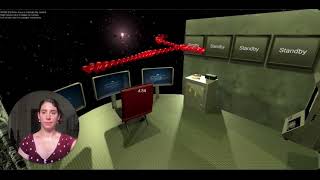 08mMy Heart Will Go On: Implicitly Increasing Social Connectedness By Visualizing Asynchronous Playe...
 26mAuraCast: A Multisensory Proof-of-Concept to Combat Alert Fatigue in Cybersecurity
 15mEnhancing Privacy through the Visual Design of Privacy Notices: Exploring the Interplay
 10mBreachMob: Detecting Vulnerabilities in Physical Environments Using Virtual Reality
 16mMetaverse - It's The Other Me, So I Need to Be Sure It's Alright
 12mGlowworms and Fireflies: Ambient Light on Large Interactive Surfaces