Investigating How University Students in the United States Encounter and Deal With...
summary
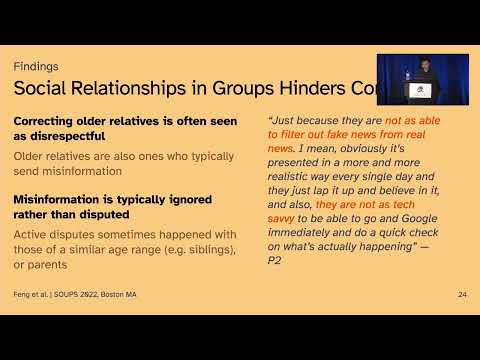
Study reports 16 semi-structured interviews with U.S. university students and finds participants encounter misinformation multiple times a week in private WhatsApp groups, often forwarded by well-intentioned older relatives; most identify false claims but stay passive to avoid family conflict. Participants see WhatsApp responsible yet constrained by end-to-end encryption. Design probes include an anonymous fact-check icon, link-sharing friction, and curated lists of known false items rather than platform-level content removal.
AI-written summary · about
chapters (7)
- 0:00Introduction
- 0:30Claim
- 1:11Infodemic
- 2:01WhatsApp
- 5:23Findings
- 9:55Design Recommendations
- 12:35Conclusion
related talks
 11m"Is Reporting Worth the Sacrifice of Revealing What I've Sent?"
 18mWhatsApp is for Family; Messenger is for Friend": Communication Places in App Ecosystems "
 13mTrust-Enabled Privacy: Social Media Designs to Support Adolescent User Boundary...
 45mHow to do effective research in an irrational world
 05mUsable Sexurity: Studying People’s Concerns and Strategies When Sexting
 15mYouth understandings of online privacy and security: A dyadic study of children...
 31mThe Walled Garden Dilemma: Privacy vs App Choice in Messaging
 28mAn Inconvenient Trust: User Attitudes Toward Security and Usability Tradeoffs...