Balancing Power Dynamics in Smart Homes: Nannies' Perspectives on How Cameras...

summary
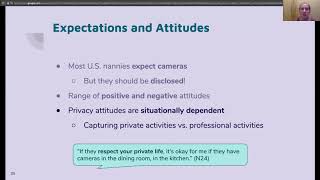
Twenty-five semi-structured interviews with nannies reveal which specifics matter: whether cameras are used for supervision versus incidental monitoring, whether employers disclose placement, and whether feeds include audio or how long footage is retained. Findings show hidden cameras and constant checking drive some nannies to quit, while footage can also exonerate caregivers. Suggested interventions are concrete: discussion guides at hiring, product nudges and access controls to prompt employer transparency and give domestic workers clearer, context-specific ways to set and learn camera policies.
AI-written summary · about
chapters (8)
- 0:00Start
- 0:14Motivation: Smart Home Dynamics
- 1:19Research Questions
- 2:27Attitudes, Intentions, and Relationships
- 3:12How Cameras Affect Relationships
- 6:48Privacy Expectations and Contextual Norms
- 8:20Cameras, Power, and Choice
- 9:39Interventions to Support Privacy & Agency
related talks
 12mBystanders’ Privacy: The Perspectives of Nannies on Smart Home Surveillance
 12mWell-intended but half-hearted: Hosts’ consideration of guests’ privacy using smart
 10mSmart Spaces, Private Lives: A Culturally Grounded Examination of Privacy Tensions...
 22m"I don't own the data": End User Perceptions of Smart Home Device Data
 13mPrivacy Communication Patterns for Domestic Robots
 01h 09mI spy with my fly: When video surveillance goes mobile.
 20mThe Digital Sandwich Generation: Women's roles in ...
 23mCan you keep a secret? or Privacy in the Digital Age