Social Cybersecurity: Social Influence and Design in End-User Cybersecurity
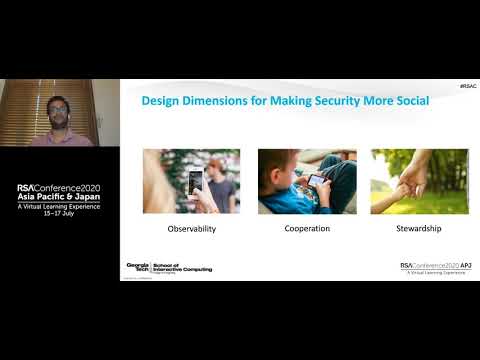
summary
Analyzes 1.5 million Facebook users’ networks to measure adoption of three tools: login notifications, login approvals (Facebook 2FA), and trusted contacts. Finds social influence drives behavior but standard tools show negative effect at low exposure consistent with disaffiliation, while trusted contacts spreads positively. Runs a 50,000 randomized experiment on social proof cues and reports a best condition with ~36% higher click-through and roughly 10% more five‑month adoptions for promoted security tools. Design levers: observability, cooperation, stewardship.
AI-written summary · about
chapters (6)
- 0:00Start
- 0:09Social Cybersecurity: Social Influence and Design In End-User Cybersecurity
- 5:37Absent knowledge of how social influences affect security behaviors we have little hope of doing better.
- 17:47How can we design systems that encourage better cybersecurity behaviors?
- 19:02How can we design cooperate Security systems that make group security a joint effort
- 20:17How can we design systems that allo people to act on their concern fo the security of their oved on?
related talks
 13mNegative Effects of Social Triggers on User Security and Privacy Behaviors
 23mA Typology of Perceived Triggers for End-User Security and Privacy Behaviors
 01h 07mKeynote Presentation Blinded by “the weakest link” A New Perspective on Human Risk
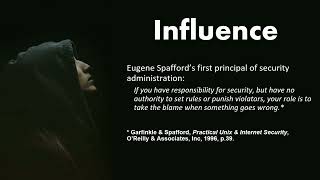 50mUsing Influence to Stop the Unfluence: The Secret Sauce of Cybersecurity
 28mSecurity Through Design - Making Security Better By Designing for People
 17mDesigning security and safety for billions
 30mThe Power of Persuasion: Better Security Through... Manipulation?
 13mUnpacking the Social and Emotional Dimensions of Security and Privacy User Engagement