The Power of Persuasion: Better Security Through... Manipulation?

summary
Argues that specific behavioral levers — reciprocity, social proof and commitment and consistency — produce measurable security gains: language tweaks raise cooperation from ~60% to ~90%, free samples yield ~300% purchase uplifts, Milgram-style authority effects hit ~65%, and charity pins triple donation rates. Recommends concrete tactics (peer-based security champions, small favours, targeted finance training, pilot static analysis, perceptual-contrast ordering of budget asks, and co‑creating policies) and reports these produce higher early reporting, piloting uptake and overall compliance.
AI-written summary · about
chapters (12)
- 0:00Introduction and welcome
- 1:06Why persuasion matters in security
- 3:54Conditions for psychological triggers
- 5:38Examples of psychological influence
- 7:03Building likability in security teams
- 11:16The power of reciprocity
- 14:29Authority and influence
- 17:43Commitment and consistency principles
- 19:30Social proof and peer pressure
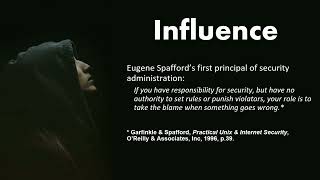
- 22:00Perceptual contrast in decision making
- 23:45Psychological ownership in solutions
- 24:48Q&A session
related talks
 50mUsing Influence to Stop the Unfluence: The Secret Sauce of Cybersecurity
 30mSurfing the Motivation Wave to Create Security Behavior Change
 28mPower Dynamics in Security Leadership: a legato leitmotif... (Sarai Rosenberg)
 19mSE, Applied Educational Theory, And The Gap Between Them
 43mEngagement through Entertainment: How to Make Security Behaviors Stick
 50mWinning Buy-In: Mastering The Art Of Communicating Security To Management
 11mPeople-Powered Security: The Role of Soft Skills
 53mThe Psychology of Social Engineering