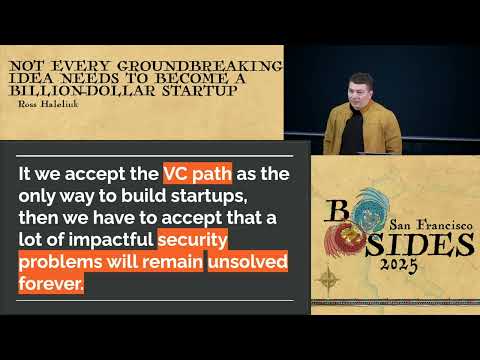
Not Every Groundbreaking Idea Needs to Become a ...
summary
Cybersecurity ends up with 5,000+ startups and a crowded vendor landscape, yet many problems are sub-venture scale and never attract VC fit. The claim: niche issues like endpoint vulnerability automation, HRIS-driven identity gaps, and Slack-based alert triage need different paths. Viable options include bootstrapping (Canary: profitable year one, >2,000 customers, ~\$20M ARR), the one‑round Silicon Valley small business route, and services (constituting >50% of the market); AI might change services economics, but that outcome is uncertain.
AI-written summary · about
chapters (12)
- 0:00Introduction and welcome
- 1:04Why not every idea needs venture scale
- 6:46Venture model limitations in security
- 10:38Alternative business models overview
- 13:07Bootstrapping as a viable path
- 15:34Silicon Valley small business model
- 18:00Services model in cybersecurity
- 20:49Non-business ways to impact security
- 23:19Success beyond venture scale
- 24:02Q&A on AI and corporate funding
- 27:54Q&A on funding and ownership
- 29:10Closing remarks and thanks
related talks
 50mThe State of Venture Capital in Cybersecurity
 31mUsing Market Knowledge to Catalyse a Fast Growing Community
 24mBootstrapping Security
 48mInvesting in Cyber: How to Raise Money for a Cyber Startup
 32m5 security startup pitches to raise money and eyebrows
 11mCybersecurity for an Inclusive Future
 33mRethinking How Startups Are Built and Scaled
 06m20 Lessons for Crypto Founders