A Typology of Perceived Triggers for End-User Security and Privacy Behaviors

summary
Survey of 852 MTurk respondents reports 1,947 recent S&P behavior changes and classifies the immediate prompts: social triggers drive 39% of events, proactive triggers 34%, forced triggers 26%. Behaviors include updating device authentication, installing security apps, changing passwords, and adjusting Facebook privacy. Low-to-medium security behavioral intention users show highest reliance on social prompts, and socially triggered changes are four times more likely to be shared. Design takeaways: enable social sharing, expand beyond warnings, and personalize trigger types.
AI-written summary · about
chapters (13)
- 0:00Intro
- 0:12A Typology of Perceived Triggers for End-User Security and Privacy Behaviors
- 1:25Challenge: Bridging the expert/end-user gap
- 2:06Behavior Change Model
- 3:53There's less work on behavioral triggers
- 5:30Triggers for security & privacy behaviors
- 8:12Research Questions
- 11:49Trigger likelihood varied by system
- 12:44RQ2: How does trigger frequency vary across levels of security behavioral intentions?
- 13:30People with low-medium SBI were more Likely to report social triggers
- 14:39Socially triggered behaviors were four times more likely to be shared with others
- 16:34Summary
- 18:15Explore the trigger design space
related talks
 13mNegative Effects of Social Triggers on User Security and Privacy Behaviors
 13mUnpacking the Social and Emotional Dimensions of Security and Privacy User Engagement
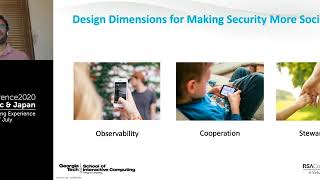 23mSocial Cybersecurity: Social Influence and Design in End-User Cybersecurity
 30mSurfing the Motivation Wave to Create Security Behavior Change
 35mHow UX Research and Behavioral Science Can Help to Improve People's Cyber Security Behaviors
 05mDo Privacy and Security Matter to Everyone? Quantifying and Clustering User-Centric
 01h 03mWhy Don't Users Do What They are Supposed to Do? A look at users and security
 11mMore than Usability: Differential Access to Digital Security and Privacy