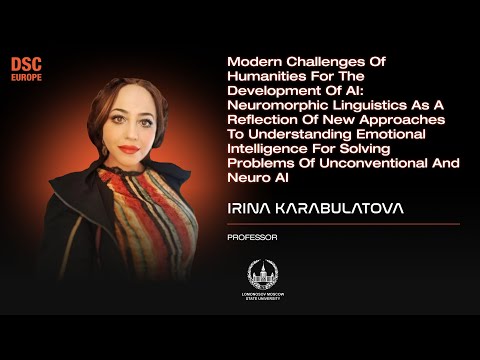
Neuromorphic Linguistics: Advancing Emotional Intelligence in Neuro-AI
summary
Claims neuromorphic linguistics needs a non‑discrete, graded model of emotion—emotional intelligence gradation (general, emotionogenic, neuromorphic, emotive)—and a verbal-paraverbal-nonverbal hybrid model combining neurology, NLP and AI. Uses bilingual Russian–Chinese field data, lexicographic features, expert annotations and metagraph-style semantic distributions; publishes a joint article and runs student workshops. Proposes building assistive instrumentation for alexithymia and stress-related speech profiles and reports preliminary cross-country patterns rather than a finished product.
AI-written summary · about
chapters (9)
- 0:00Neuromorphic Linguistics intro
- 5:04Breakout to Neo-Aicon event
- 10:04Kazan school and emotional IQ
- 15:01Emotional and emotive IQ types
- 20:59Social morphic language & engineering
- 25:20Holism in emotional AI modeling
- 30:10Alexithymia and AI emotional correction
- 33:38Emotional support devices
- 37:28Q&A on bilingualism
related talks
 46mBeyond Deep Learning: The Cognitive AI Frontier
 24mApplying ML & NLP in Qualitative Research Activities
 11mAmbient Intelligence and Emotionally Intelligent Devices
 01h 23mBeyond Sentiment Emotion Mining with Python and machine learning
 42mReasonable AI
 46mAI That Reads Emotions: What It Means for Data Privacy, Consent, Your Teams
 34mEnhancing Customer Experiences with Emotional AI,
 31mRobotic emotions