2025: year of Ai dilemma - ethics, regulations and innovations
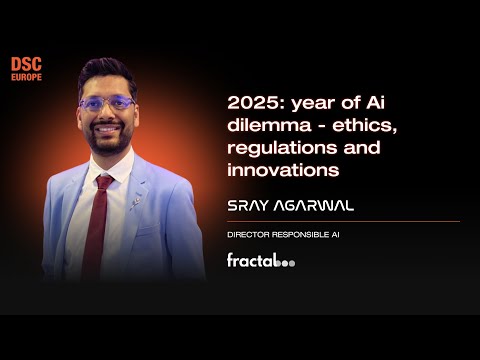
summary
Argues irresponsible AI creates three tangible costs—revenue, reputational, regulatory—and cites a survey claim that responsible AI projects earn about twice the profit; gives concrete harms: a rape in the metaverse and a teenager’s suicide after chatting with a bot. Recommends specific controls: red teaming, synthetic data, RAG privacy checks, LIME/SHAP plus end-to-end explainability, and automated LLM as a judge. Proposes interdisciplinary AI governance, 80–90‑question certifications, cognitive compliance and modular adaptive governance for fast regulatory change.
AI-written summary · about
chapters (18)
- 0:00AI ethics and governance intro
- 1:13Irresponsible AI consequences
- 2:58Global AI regulations
- 3:41Responsible AI principles
- 5:07AI governance in data science
- 6:33Why AI governance matters
- 8:20Building AI governance committee
- 10:32AI project compliance
- 11:32Cognitive compliance for AI
- 12:36Protecting children in AI
- 14:00AI governance challenges
- 16:05Red teaming AI models
- 17:11Ethical AI boundaries
- 18:17LLM evaluators for AI
- 20:05AI governance auditing
- 20:26Adaptive AI governance
- 21:53Interdisciplinary AI teams
- 22:36Training REI champions
related talks
 23mThe AI Dilemma — Steering towards a More Humane Future
 17mAI Law & Ethics: developing responsible AI systems
 01h 00mAI: Law, Policy, and Common Sense Suggestions to Stay Out of Trouble
 13mAI - Out of Control
 53mWild West's End
 53mAI: Law, Policy and Common Sense Suggestions on How to Stay Out of Trouble
 15mResponsible AI 2.0 : NO AI without RAI
 39mBuilding a Responsible AI Governance Program