Unshackling Passkeys: Digital Strategies for Strong Identity Binding
summary
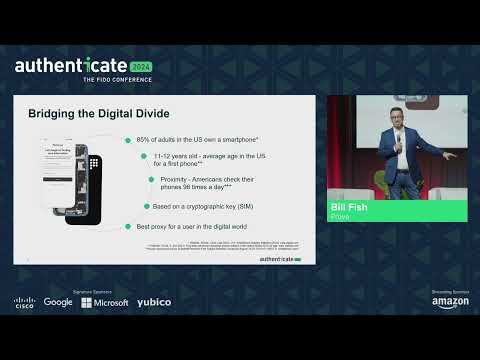
Argues that strong identity binding uses the mobile as a cryptographic anchor and reduces friction for high‑value cases (finance, healthcare). Proves possession via SMS OTP, magic links or silent network authentication; scores number reputation with SIM tenure and SIM‑swap/port signals; verifies ownership to tie a person to a number. Cites ~85% smartphone penetration and 96 daily phone checks to justify mobile ubiquity. Claims this enables low‑friction passkeys, verifiable credentials and faster flows like possession, reputation, ownership for account recovery and quick apply.
AI-written summary · about
chapters (12)
- 0:00Introduction by Pam Dingle
- 1:02Meet Bill Fish and his background
- 2:27Identity and authentication lifecycle
- 3:51Identity verification and binding challenges
- 6:14High-risk use cases and account recovery
- 8:21Digital document verification drawbacks
- 11:11Mobile phone as identity proxy
- 13:18Cryptographic key and SIM card trust
- 14:22Possession reputation ownership model
- 17:35Triangulating identity behind device
- 18:58Unlocking passkey use cases
- 20:52Q&A session
related talks
 28mBinding tokens
 22mKeynote, Identity & Authentication in ePromiseland
 28mAuthentication Digital Financial Services
 30mAuthentication for humans, why passkeys finally make sense.
 40mSecuring Your Direct to Consumer Identity Strategy
 39mHow to Not Lose Your Identity in 2035
 24mPasskeys and digital identity best practices
 01h 02mWhy using SMS in the authentication chain is risky