Enabling Continuous Delivery with Database Practices
summary
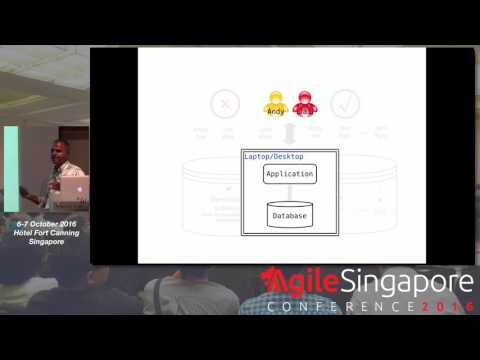
Argues that databases join the delivery pipeline by using version-controlled schema migrations (Git + DBDeploy/Liquibase/Flyway), letting developers provision schemas via Ant/Docker/Vagrant, and running CI (Jenkins) to apply migrations so app and schema are always in sync. Recommends app-driven upgrades (app applies missing migrations), small incremental refactors with expand/contract refactoring (views/triggers/generated columns for compatibility), data-migration-as-migrations, and reports successful teams deploying two to three times a day.
AI-written summary · about
chapters (29)
- 0:00Intro
- 0:36Why do you do continuous delivery
- 0:46Reduce risk
- 1:09Respond to customer needs
- 2:34Database Silo
- 2:58One step at a time
- 3:10Collaboration techniques
- 3:57Version control
- 5:01Provisioning
- 8:32Common Schema
- 11:27Continuous Integration
- 17:19Context
- 18:39Demo
- 23:42Deploy frequently
- 24:15Refactoring techniques
- 24:27Database Refactoring
- 26:22Making Changes
- 26:39Transition Period
- 27:02Contract Period
- 27:20Multiple Versions
- 27:41Example
- 29:01Lazy Migration
- 29:54Simple Scenario
- 30:41Synchronize
- 31:41Contract
- 32:02Oracle
- 35:00Migrations
- 37:05Deployment
- 37:27Integration
related talks
 31mDevOps Practices for the Database Team
 46mDatabase DevOps - It is Possible!
 21mApplying Continuous Delivery to Database Schema
 01h 00mContinuous Integration and Delivery for Databases
 11mLightning Talk: Continuous Delivery…except for Database Changes
 36mUnlocking the Benefits of Database DevOps and Automation
 51mBetter software, faster: principles of Continuous Delivery and DevOps
 05mMaking Database Changes a Tier one Artifact