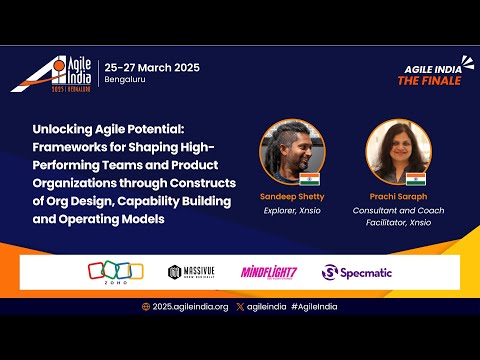
Frameworks for Shaping High-Performing Teams
summary
Framework bootstraps product orgs for 200–500+ people using practical artifacts: team topologies to define interaction models, a capability catalog of role skills and progression, and layered competency assessments (self, L1/L2, artifact validation). It pairs hiring/augment/retain/fire strategies with individualized learning journeys based on the Dreyfus model, and favors short experiments (e.g., three lines of Google Translate to validate localization) over year‑long backlogs. Five‑year engagements shift teams from firefighting to measurable capability uplift as leaders acknowledge real gaps.
AI-written summary · about
chapters (11)
- 0:00Introduction
- 3:55Forming teams challenges
- 9:07Building high-performing teams
- 15:04Team capability assessments
- 16:29Hiring retention upskilling
- 20:17One-off training fails
- 23:30Ongoing learning journeys
- 26:39Q&A firefighting
- 31:54Q&A power dynamics
- 37:29High-performing traits
- 46:10Closing remarks
related talks
 01h 00mBuilding Great Teams
 41mWhy one model can’t fit all creating fulfilling engineering organizations
 47mScaling Design Orgs Rapidly for Long Term Success
 44mFundamentals & Practices for getting a High-Performance Team
 27mTrust Driven Teams Building High Performance Through Connection
 28mJourney from Design Afterthought to Design First
 46mEssentials for Building and Leading Highly Effective Development Teams
 28mFramework for Thriving Remote Leadership