DualPanto: A Haptic Device that Enables Blind Users to Continuously Interact with Virtual Worlds

summary
A handheld dual-pantograph system maps an avatar to a me handle and actuates an it handle to continually show a moving object’s position; hardware uses aluminum linkages, Teflon washers, low‑ratio rotation motors and PID position/rotation control, with a teardrop handle shape for orientation. Six visually impaired participants play a soccer prototype after 8–15 minutes training, report high enjoyment (6.5/7), can pass, aim and dodge, but the device currently supports only one multiplexed “it” object.
AI-written summary · about
chapters (7)
- 0:00Introduction and demo
- 3:19Introducing DualPanto
- 4:45How DualPanto works
- 7:10Hardware setup
- 9:30User evaluation
- 13:08Conclusion and future work
- 14:53Q&A session
related talks
 21mEnabling People with Visual Impairments to Navigate Virtual Reality with a Haptic and Auditory ...
 17mTowards a Multisensory Augmented Reality Map for Blind and Low Vision People: a Participatory ...
 20mComparing Computer-Based Drawing Methods for Blind People with Real-Time Tactile Feedback
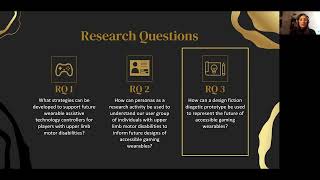 07mFrom Imagination to Innovation: Using Participatory Design Fiction to Envision the Future of Acce...
 03mFoot-Based Game Controller to Improve Interaction Between Participants
 20mHybrid-Brailler: Combining Physical and Gestural Interaction for Mobile Braille Input and Editing
 06mVirtual Paving: Rendering a Smooth Path for People with Visual Impairment through Vibrotactile ...
 11mTilt-Explore: Making Tilt Gestures Usable for Low-Vision Smartphone Users