The Technical Debt Prevention Clinic

summary
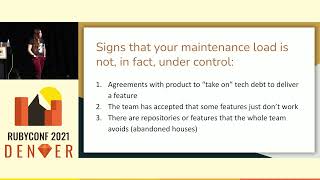
Defines technical debt as intentionally shipped but immature working code and contrasts that with outright bad code (bugs, copy/paste, flaky tests); recommends measuring trends with SonarQube, tracking velocity and incidents, and avoiding big rewrites that create “two messes.” Advocates iterative micro and limited macro refactors (one or two active), introduce behavioral tests, use CI/CD, and manage feature flags carefully to avoid flag sprawl. Promotes collaboration techniques like pair programming and mobbing to spread knowledge and prevent future debt.
AI-written summary · about
chapters (10)
- 0:00Introduction and agenda
- 1:53Understanding technical debt
- 6:19Identifying bad code
- 10:39Quantifying the problem
- 19:00Common pitfalls in remediation
- 24:10Strategies for reduction
- 32:03Feature flags and debt
- 36:13Cultural shift for prevention
- 43:57Collaborative development
- 54:20Best practices and conclusion
related talks
 34mThe Technical Debt Trap
 53mThe Technical Debt Trap
 48mTechnical Debt Trap
 35mTechnical Debt. A guide for developers and IT managers
 01h 36mWorkshop: Tackling Technical Debt: An Analytical Approach
 25mDemystifying Technical Debt
 28mTechnical Debt: Why it'll ruin your software
 35mTechnical Debt: When Interest Eats Your Code