Technical Debt: Why it'll ruin your software
summary
Argues technical debt is more than bad code: it’s product and management choices that make future changes costlier, and it shows up as slower feature delivery and more bugs. Demonstrates concrete practices — mark plan act test, putting ~20 percent of sprint capacity on debt, post‑mortems, unit tests — and calls out tools and risks: Jira ticket rot, Heroku/compatibility traps, untested Django code. Gives origin year 1992 and quantifies wasted time ~3.8 hours/day debugging.
AI-written summary · about
chapters (10)
- 0:00Start
- 2:45Agenda
- 5:03Problems with John's project
- 7:22Technical debt is a bad thing
- 7:58Technical debt quadrant
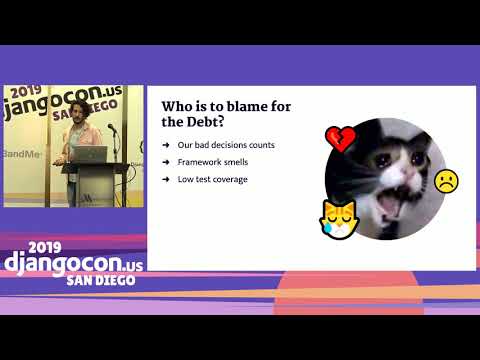
- 8:43Who is to blame for the Debt?
- 11:23How do we deal with it?
- 13:39Technical Debt board
- 14:29Healthy solutions
- 17:30Evolutionary design
related talks
 35mTechnical Debt. A guide for developers and IT managers
 34mThe Technical Debt Trap
 45mTechnical Debt: Taking back control when it's already messed up
 01h 01mThe Technical Debt Prevention Clinic
 18mTechnical Debt: How to Communicate to Teams, Beyond the Tech
 25mDemystifying Technical Debt
 31mDealing with Technical Debt
 49mDług techniczny - skryty oprawca organizacji nie tylko technologicznych