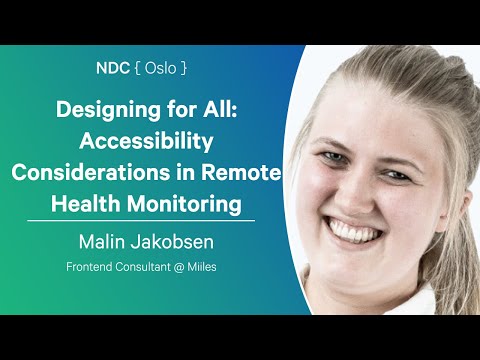
Designing for All: Accessibility Considerations in Remote Health Monitoring
summary
A prototype workflow shows three concrete requirements: devices must be accessible understandable adaptable (clear summaries, drug-aware alerts, and age-specific UI), data must be rendered as interactive visualizations and high contrast modes (line graphs for trends, short explainer text, color-coded ranges), and feature tiers must prevent false alarms by combining device context with user-entered meds and simple fallback controls. Usability testing with older adults surfaces repeated false alerts and drives these exact fixes.
AI-written summary · about
related talks
 01h 00mAccessible UX: Design for the rest of us
 20mAge and Interface: Equipping Older Adults With Technological Tools (Project Showcase)
 49mDesigning Accessible Apps
 22mDesigning for the overlooked user we all become
 53mInclusive Design Patterns: From Gen-Z To to Aging Audiences
 35mUmarèll Experience: Designing for a Senior User Base
 50mA Look into Accessible Integration w IoT Tech
 38mAccessibility in Data Visualizations: Two Case Studies