It's not your parents' HTTP

summary
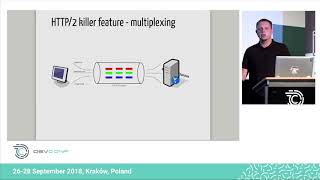
Overview of how the web moves from simple GET/close to persistent, binary transport: HTTP/2 uses HTTP/2 multiplexing and header compression (HPACK) to cut round trips and shrink headers; server push unreliable with cache because servers can’t know client cache state so pushes can slow pages; WebSockets provide a single bidirectional TCP socket for realtime; ServiceWorker intercepts requests to enable offline caching and instant apps; QUIC moves the multiplexing model to UDP as QUIC over UDP to avoid TCP head-of-line blocking; real examples include browser devtools and Chrome net internals.
AI-written summary · about
chapters (6)
- 0:00Start
- 4:29Software Engineer
- 5:222000 B.C.- Want to be an engineer!
- 6:44"The word engineer (Latin ingeniator) is derived from the Latin words ingeniare ("to contrive, devise") and ingenium ("cleverness )
- 30:57Reality: multiple versions, implementations, extensions, working drafts
- 32:27XMLHttpRequest Gets the data from the server by a client side script
related talks
 01h 00mHTTP/2 - The future of the web today
 43mHTTP 2.0: why and how
 39mWith Great Power Comes Great Responsibility - Using HTTP/2 Responsibly
 50mHigh-performance web apps using HTTP/2
 20mA quick primer on http2
 01h 03mWhirlwind tour through the HTTP2 spec
 18mThe Route to HTTP/2
 46mHTTP/2.0 101 Introduction