API Gateway to Service Mesh: Navigating a Changing Landscape
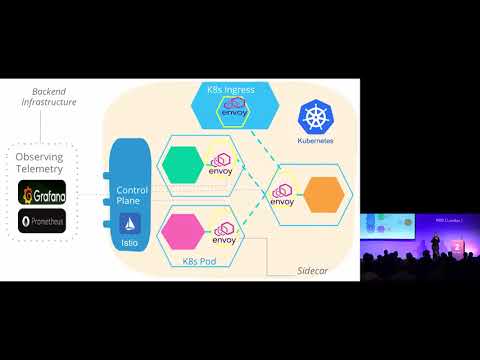
summary
Argues that a service mesh (side‑car proxies like envoy plus a control plane such as istio) actually implements traffic management, retries, circuit breakers, mTLS and distributed tracing inside the cluster, while traditional API gateway products (Kong, Apigee, nginx) keep developer portals, lifecycle, monetization and analytics at the edge. Recommends mesh for inter‑service concerns, gateway for external developer experience, and a toolkit approach (Prometheus, Swagger, Readme, Ambassador) tied by API‑driven config and healthy open‑source communities to survive rapid change.
AI-written summary · about
chapters (7)
- 0:00Start
- 15:14Api Management Systems Market
- 17:57How Do I Pick an Api Management Gateway That Plays Nicely with Service Mesh
- 22:24Observability
- 30:57Api Management
- 34:48Api Driven Approaches
- 37:45Evolutionary Architecture
related talks
 38mAPI Gateways & Service Mesh: What’s best for us
 32mOne API To Rule Them All? What the Gateway API Means For Service Meshes
 30mA Comprehensive Guide to API Gateways, K8s Gateways, and Service Meshes
 26mSynchronous Communication Patterns: A journey from ESB to APIs [...]
 53mService Mesh: What, Why, And How?
 09mK8s API Gateway: Service Mesh Strategies for Scalable Solutions
 26mWhere API management meets the service mesh
 43mService Mesh and the future of networking